
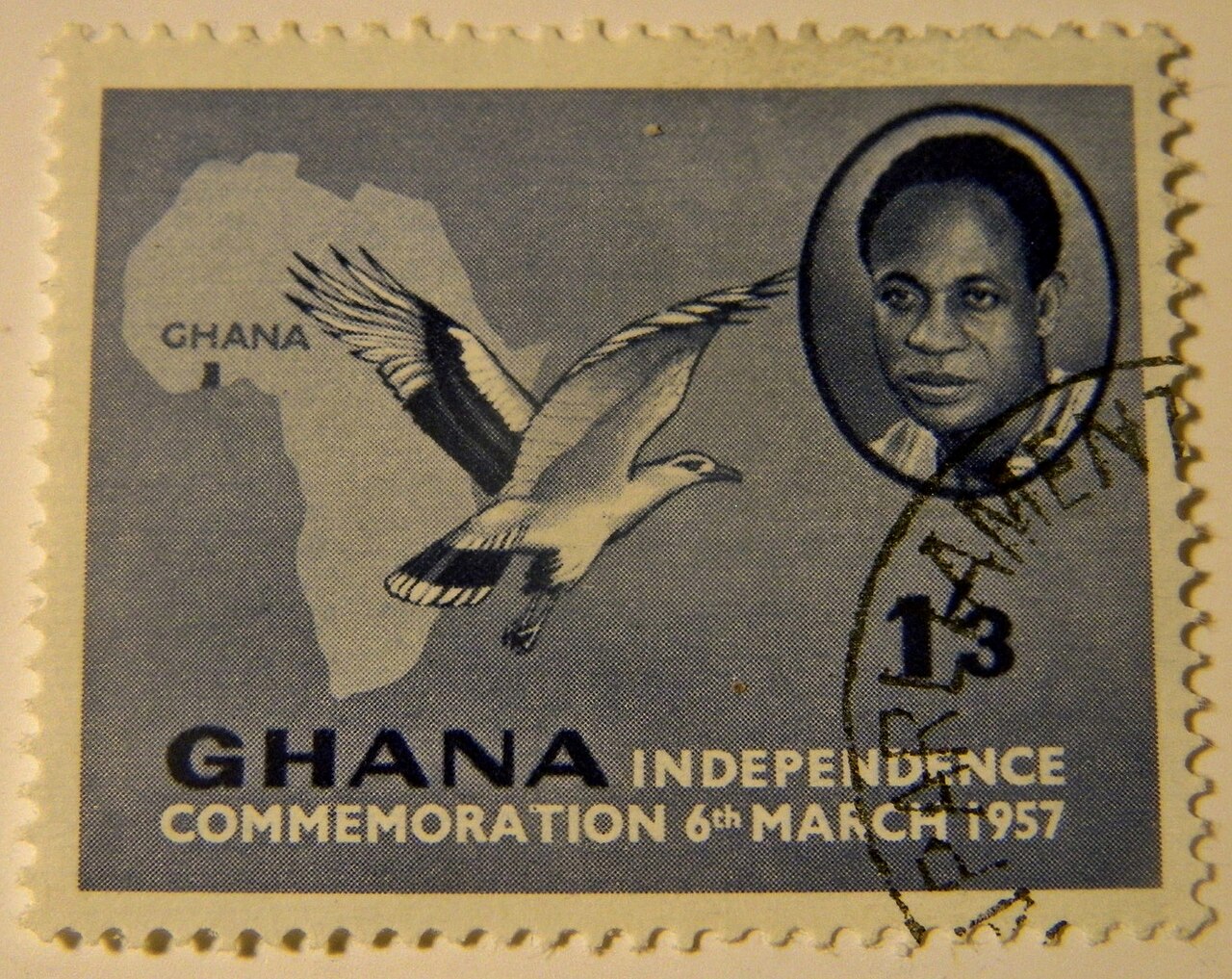
Ghana, 1957: Nkrumah and the Opening of Africa's Independence Era
On March 6, 1957, the Gold Coast became Ghana, the first sub-Saharan African nation to achieve independence from colonial rule. This pivotal moment, led by Kwame Nkrumah, signaled the dawn of a new era for an entire continent.
Midnight on March 6, 1957, marked more than just the birth of a new nation; it ignited a continent-wide transformation. As the Union Jack was lowered for the last time over the Gold Coast and the new flag of Ghana rose in its place, the moment reverberated far beyond the streets of Accra. Under the leadership of Kwame Nkrumah, Ghana became the first sub-Saharan African country to achieve independence from European colonial rule, signaling an unstoppable wave of decolonization that would redefine the global political map.
The Road to Self-Rule
The British Gold Coast colony, established in the 19th century, was one of Britain's most prosperous African possessions, rich in cocoa, gold, and timber. However, the end of World War II brought a new global order and increased demands for self-determination. Returning African soldiers, who had fought for freedom abroad, found themselves still subject to colonial rule at home, while international organizations like the United Nations began to champion the rights of colonized peoples.
It was into this ferment that Kwame Nkrumah returned to the Gold Coast in 1947, invited by the United Gold Coast Convention (UGCC) – a political movement led by figures like J.B. Danquah – to serve as its General Secretary. Nkrumah, educated in the United States and Britain, had been deeply involved in pan-Africanist movements abroad. His more radical vision for immediate self-government, encapsulated by the slogan “Self-Government Now,” soon put him at odds with the UGCC's more gradualist approach. In 1949, Nkrumah broke away to form the Convention People's Party (CPP), which quickly gained mass support, particularly among the urban working class and farmers.
The CPP's strategy of “Positive Action”—a campaign of non-violent civil disobedience, strikes, and boycotts—led to Nkrumah's imprisonment by the colonial authorities in 1950. However, the British, sensing the tide turning, introduced a new constitution in 1951, allowing for a greater degree of internal self-rule and universal adult suffrage. In the subsequent general election, the CPP won an overwhelming majority of seats, even while Nkrumah was still incarcerated. He was promptly released from prison and appointed Leader of Government Business, a position that rapidly evolved into Prime Minister as Ghana moved steadily towards full sovereignty.
A Continent Awakens
The years between 1951 and 1957 saw a complex transition. Nkrumah and the CPP government worked alongside British authorities, gradually assuming control over various governmental functions. This period was not without internal political challenges; regional parties and opposition groups, concerned about the CPP's increasing centralization of power and Nkrumah's growing authority, voiced their dissent. Despite these tensions, the momentum towards independence proved irresistible.
On the eve of independence, Nkrumah delivered a powerful speech, declaring, “We are going to see that we create our own African personality and identity.” He emphasized that Ghana's freedom was inextricably linked to the liberation of the entire African continent. “Our independence is meaningless unless it is linked up with the total liberation of Africa,” he famously stated. This pan-African vision became a cornerstone of Ghana’s foreign policy, inspiring leaders across Africa and beyond.
Within a few short years, the impact of Ghana's independence was undeniable. The “wind of change” that British Prime Minister Harold Macmillan spoke of in 1960 swept across Africa, as nation after nation—Nigeria, Congo, Tanganyika, and many others—gained their own independence. Ghana actively supported liberation movements, offering financial aid, training, and diplomatic backing to groups fighting colonial rule in other parts of the continent. Accra became a hub for anti-colonial activists and a center for pan-African conferences.
The Complex Legacy
In the aftermath of independence, Nkrumah's government embarked on ambitious development projects aimed at industrializing Ghana and expanding education and healthcare. The Akosombo Dam, a massive hydroelectric project, stood as a testament to his vision for a modern, self-sufficient Ghana. Internationally, Nkrumah was a leading voice in the Non-Aligned Movement, seeking to chart an independent course during the Cold War.
However, Nkrumah's domestic policies also saw a gradual shift towards authoritarianism. The Preventive Detention Act of 1958 allowed for imprisonment without trial, and by 1964, Ghana had officially become a one-party state under the CPP. This centralization of power, coupled with economic difficulties and accusations of corruption, led to growing discontent. In 1966, while Nkrumah was on a state visit to Vietnam and China, his government was overthrown in a military coup.
The legacy of Kwame Nkrumah and Ghana's independence in 1957 remains a subject of considerable historical discussion. He is widely celebrated as a pivotal figure in African liberation, a visionary pan-Africanist whose courage and determination inspired millions. At the same time, his later years in power are critically examined for their erosion of democratic institutions and suppression of dissent. Yet, the foundational achievement of 1957—the breaking of colonial chains and the paving of the way for a self-determined Africa—stands as an undeniable turning point in 20th-century political history, forever altering the course of international relations and the destiny of a continent.
