
The Election of 1800: America's First Transfer of Power Between Rival Parties
The presidential election of 1800 stands as a foundational moment in American democracy, marking the first time power peacefully transitioned from one rival political party to another. Amidst intense partisan animosity and a deadlock in the electoral college, the nascent republic navigated a profound test of its constitutional framework.
The presidential election of 1800 was not merely a contest for leadership; it was an existential crucible for the young United States, testing whether a government founded on popular sovereignty could withstand the bitter divisions inherent in partisan politics. At its core, the election presented a fundamental challenge to the prevailing notion that a change in power might necessitate revolution rather than orderly succession.
By the late 1790s, American politics had polarized around two emerging factions. The Federalists, led by President John Adams and Alexander Hamilton, advocated for a strong central government, a national bank, and a pro-British foreign policy. Their opponents, the Democratic-Republicans, marshaled by Thomas Jefferson and James Madison, championed states' rights, agrarian interests, and a more favorable stance towards revolutionary France. These ideological clashes were intensified by contemporary events, including the XYZ Affair, the Quasi-War with France, and the controversial Alien and Sedition Acts, which Federalists used to suppress dissent, often targeting Republican newspaper editors. The political climate was venomous, with both sides accusing the other of threatening the very fabric of the republic.
A Nation Divided, A Constitution Tested
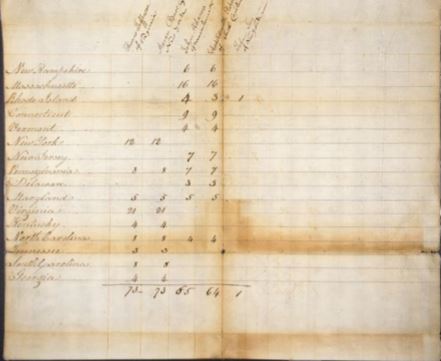
The election itself unfolded under the original provisions of the Constitution, which did not differentiate between votes for president and vice president. Each elector cast two votes, and the candidate with the most votes became president, the second-highest became vice president. The Republican ticket consisted of Thomas Jefferson and Aaron Burr, while the Federalists ran John Adams and Charles Cotesworth Pinckney. As results trickled in, it became clear that the Democratic-Republicans had won a majority of electoral votes. However, a critical flaw in the system emerged: Jefferson and Burr each received 73 electoral votes, tying for the presidency. This deadlock threw the election into the House of Representatives, where each state delegation would cast a single vote.
The ensuing weeks, from February 11 to February 17, 1801, were marked by intense maneuvering and profound uncertainty. The Federalist-controlled House, despite their ideological opposition to Jefferson, now faced a choice between two Republicans. Many Federalists saw Burr as the lesser of two evils, or at least a more malleable figure. Alexander Hamilton, a staunch Federalist and a bitter rival of both Jefferson and Burr, famously intervened. Despite his deep disagreements with Jefferson, Hamilton considered him a man of principle, unlike Burr, whom he viewed as dangerously ambitious and unprincipled. Hamilton's persuasive letters to fellow Federalists urged them to support Jefferson, arguing that a Burr presidency would be disastrous for the nation.
The Peaceful Transition and Its Legacy
The House deadlocked through 35 ballots, unable to secure a majority for either candidate. Finally, on the 36th ballot, a Federalist congressman from Delaware, James A. Bayard, abstained, as did several other Federalists. This strategic shift allowed Jefferson to secure the necessary majority of state delegations and be elected president. The moment Jefferson took the oath of office in March 1801 marked an unprecedented event in world history: the peaceful, constitutional transfer of power from one political party to a diametrically opposed rival. President Adams, in a poignant gesture reflecting his respect for the constitutional process, quietly departed Washington D.C. before Jefferson's inauguration, acknowledging the will of the electors.
The peaceful resolution of the 1800 election established a fundamental precedent for American democracy, demonstrating that fierce political rivalry could coexist with respect for the rule of law and the constitutional framework. It confirmed the viability of a system where power could change hands without resort to violence or revolution. A direct legislative consequence was the ratification of the 12th Amendment in 1804, which mandated separate electoral votes for president and vice president, preventing a recurrence of the 1800 tie. This amendment, alongside the actions of the participants in 1801, solidified the mechanisms for orderly succession and reinforced the enduring principle that in the United States, political power ultimately derives from the ballot box, not from force or factional entrenchment.
